This exclusive article originally appeared in PES Wind 2 – 2026 with the title, The asset manager’s dilemma. It was written by Allen Hall and other members of the Weather Guard Lightning Tech team.
The technology companies that win in this industry have stopped competing on engineering alone. They design products and installations around the person who can move a project forward: the asset manager.
Picture an asset manager’s morning. Their inbox holds an engineering recommendation for a leading-edge erosion campaign, a service bulletin from an OEM, a renewal note from the insurance broker, three vendor pitches for various products, and a reminder from the capital partner that the updated CapEx case is due by Friday. And the site supervisor just called to report a blade collapse due to a lightning strike.
Each input is legitimate and involves an actual operational problem. And none of them are in the same vocabulary as the others.
This is the job. Asset managers don’t run a wind farm the way site supervisors do. They translate a flood of unaligned inputs into a coherent capital plan the rest of the organization will accept. The most common outcome on any given morning is not a decision; it is a deferral. Not because the asset manager won’t act, but because the case in front of them is not defensible enough to act on.
Weather Guard Lightning Tech celebrated our 20th anniversary this year. We have spent two decades watching this dynamic from the vendor side. The conclusion we keep returning to is this: the technology companies winning in our industry are not winning simply because they have good engineering. They’re winning because they’ve tailored their solution to the asset manager’s reality.
The asset manager’s actual job
Asset managers are deeply committed to running their fleets well. They want their turbines running, site teams supported, and portfolios performing.
The external problem they face is the volume and incompatibility of tasks. Recommendations arrive faster than they can be evaluated, from sites, engineering, OEMs, vendors, insurance, each in its own language. Most of them assume the asset manager has more time, technical context, and dedicated bandwidth than they do.
The internal problem is more nuanced. Most wind technology proposals are surprisingly difficult to evaluate from an asset management perspective. The technical case is usually solid. The site case is clear. The financial case, by contrast, arrives in fragments, vendor estimates, engineering assumptions, and repair cost avoidance numbers that may or may not survive scrutiny from the investment committee. Add OEM warranty constraints to the mix and the asset manager is being asked to authorize a fleet-wide spend on a problem they cannot directly observe, against a savings model they did not build, within a warranty position they did not negotiate.
And then there is the deeper problem: it should not be so hard to act on a problem that engineering and site already agree is real. The structure of the wind industry has put a layer of friction between operational truth and financial action. Asset managers need solutions that address both sides of the problem.
What the technology companies winning right now have figured out
The wind technology companies that have succeeded in the last several years have not generally beaten their competitors on engineering alone. They have built better customer journeys around engineering. Their products include three important elements.
The first is a track record that asset managers can easily verify, such as independent test data, real customer deployments at scale, and documented field results. Numbers an asset manager can put into a portfolio memo and a board deck without flinching when somebody asks for the source.
The second is transparent economics on the installation cost. The product itself is rarely the cost driver in a wind turbine retrofit. The expense is the time and labor of getting it onto the blade: technician hours, rope-access logistics, tower downtime, and weather delays. The vendor who puts those numbers cleanly in front of the asset manager gives them the building blocks of real return on investment. When vendors don’t provide a defensible business case, the burden shifts to the asset manager to build it themselves, something most simply don’t have time to do.
The third is by far the hardest one to create: an installation method designed around the realities of work in the field. Operational realities include tight weather windows, crew availability, OEM coordination, and site logistics. Implementation is where good products go to die. The vendors who have engineered practical implementation plans are the ones whose products keep getting purchased, season after season.
Together, these three elements make products an easy yes for an asset manager. Not easy because the asset manager has lowered the bar. Easy because the vendor has done the work to make the case meet the bar.
Find out more about StrikeTape Ultra
Why we built StrikeTape Ultra
The asset manager’s dilemma is the reason we’re introducing StrikeTape Ultra.
We’ve listened to challenges asset managers face both in sales conversations and at our annual Wind Energy O&M conference in Australia. Durability in the field is one of the biggest challenges when selecting wind turbine retrofits. Not only does the product have to endure intense rain, wind, and heat, but it must do so for a long period of time. Every trip up-tower is more money lost. Asset managers told us they’ve solved this problem by using Sunrez UV-cure resin products for fast install and long-term reliability.
Sunrez, headquartered near San Diego, California, has spent 40 years developing repair products for the toughest environments. Their UV-cure resin patches have been used on wind turbine blade repairs for years and have recently received OEM approval. The platform has been refined for on-blade work; fast curing under UV light, resilient in conditions that defeat traditional two-part mixes, and straightforward for crews to apply consistently. Asset managers already know Sunrez, and they trust its performance. That is the platform we built StrikeTape Ultra on.
StrikeTape Ultra is a UV-cure installation method for the same StrikeTape retrofit we have been deploying on blades for the past fifteen years. It’s the same field-validated lightning protection technology with the same independent test reports and deployment record across more than 20,000 blades. What’s changed is the install method, which uses UV-cure resin to make installs faster for on-blade work. It offers fewer environmental constraints, more consistent cure regardless of temperature or humidity, and a long shelf life.
For a site team, that means more turbines completed per crew per day. For an engineering team, it means the same protection performance they have already validated, applied more consistently in the field. For an asset manager, it means the install line in the project budget gets meaningfully smaller, the project economics get cleaner, and the case for funding the next campaign gets easier to defend. We built StrikeTape Ultra because the lesson of twenty years in this industry is that technology, on its own, is no longer where decisions are made. The winning solution is the complete one: technical, financial, and operational.
The bar has moved
For asset managers looking for new solutions, the path is frustrating and familiar. The site team flags a problem, and the engineering team validates a fix. The asset management team asks reasonable questions the available data can’t answer. Another season goes by. The decision that could have been made two seasons ago eventually gets made, late, expensive, and after damage that did not need to accumulate.
For technology companies still competing on engineering alone, the path is becoming familiar too. Recommendations get praised by engineering teams. Pilots get approved at a turbine or two. But scaling is difficult because the proposal isn’t tailored for asset managers. The product is not the problem.
Twenty years in this industry has taught us that the bar in wind has moved. Great engineering is now the price of entry, not the differentiator. The differentiator is whether the product has been built around the asset manager’s actual job. That is the work the winners have already started doing. It’s the work StrikeTape Ultra is built for.
Request more information about StrikeTape Ultra
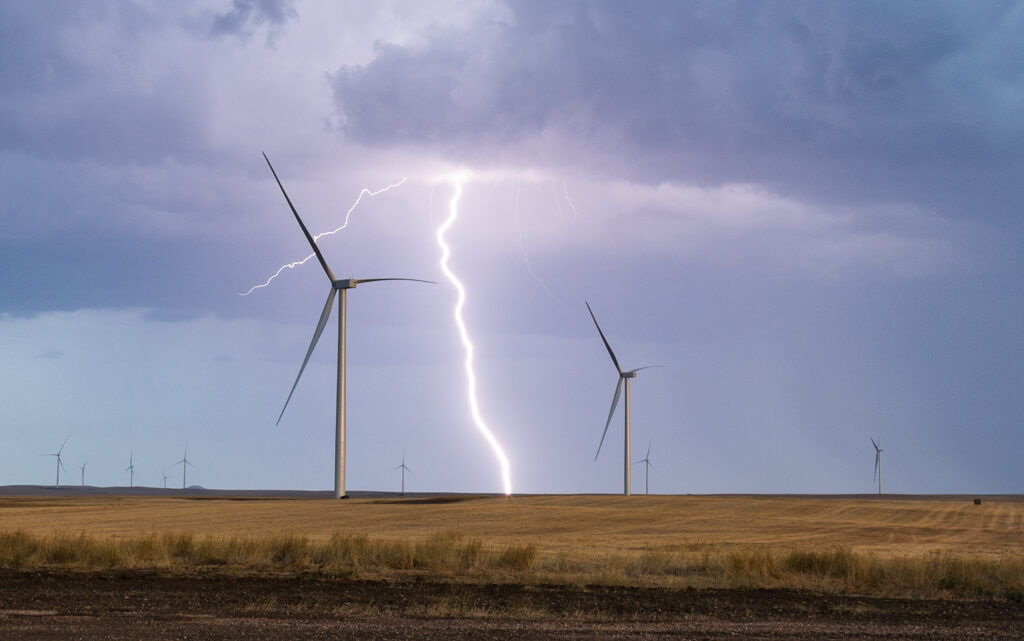
Unless otherwise noted, images are from The Uptime Wind Energy Podcast.
Contact us for help understanding your lightning damage, future risks, and how to get more uptime from your equipment. Download the full article from PES Wind here. Previous articles you may want to read:
Find a practical guide to solving lightning problems and filing better insurance claims here
See how a cohesive operational strategy can dramatically improve reliability and profitability