



Podcast: Play in new window | Download
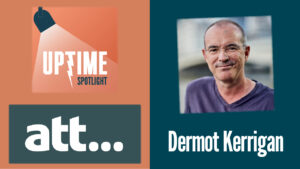
Dermot Kerrigan, Director and Co-founder at Active Training Team, joins to discuss how the immersive EPIC safety center helped London’s £5 billion Thames Tideway tunnel finish with zero fatalities and zero life-changing injuries. Plus similar centers built for Ørsted’s Hornsea projects and SSE, and the mobile program his US team runs for wind and solar sites.
The Uptime Wind Energy Podcast is brought to you by Weather Guard Lightning Tech, creators of the StrikeTape Ultra LPS retrofit. Subscribe to Uptime’s Substack newsletter. And check out Rosemary’s “Engineering with Rosie” Youtube channel. Have a question we can answer on the show? Email us!
Episode Transcript
Uptime Spotlight: Dermot Kerrigan, Director and Co-founder, Active Training Team
Allen Hall: Welcome to Uptime Spotlight, shining light on wind energy’s brightest innovators. This is the progress powering tomorrow.
Dermot Kerrigan: Thanks very much for having me back, Allen.
Allen Hall: Well, I brought you back because I want to talk about the major construction project in London that just wrapped up, which you were intimately involved with in terms of safety training through Active Training Team. That’s the Thames Tideway project, a massive sewer project in London that started around 2016 and finished about a year ago, when I saw King Charles open and christen the new Tideway. And it’s in operation today. Do you want to provide some background on what that project was and why it was even started?
Dermot Kerrigan: Yeah, sure. We are a city now of around 9 million people, I believe. The sewage system that we have here was designed, I believe, for 2 million people back in Victorian times. And what was happening? Whenever we had a big storm, the sewers couldn’t cope with all the water, so the excess poured into the River Thames, which runs through London, with huge, as you can imagine, health and environmental repercussions and risks.
So it was decided that they needed to stop this by building a huge tunnel along the River Thames for 25 kilometers. Whenever this happened, rather than being poured into the Thames, it would go into this tunnel, be run downstream to the east of London, be treated, and then go back into the system.
They decided to do this back in 2015, when the first spade hit the ground, and it just got commissioned. The final screws got tightened on it in March of this year, so that was an 11-year period. It employed 25,000 people over that period from various contractor companies, main works contractors and subcontractors who were tasked with building this thing.
It went through a number of phases, from groundwork, literally digging holes, before they dug the big hole, which was the tunneling. There was pre-tunneling before that, and then, having done the tunnel, they actually built this thing and all the huge access shafts along the length of the river. The deepest point of the tunnel is 60 meters. It’s a hell of a thing. You could drive two London double-decker buses through it at its widest point.
Of course, after the tunneling phase, there was commissioning, building parkland along the length of the Thames, and landscaping, before they actually said this thing is open. That was in March of this year, and apparently 21 million tonnes of sewage have been captured by it so far. So it does seem to be doing the trick.
Allen Hall: It’s a massive project, and it’s such a complicated project. As an engineer, I get really interested in the details of how that was going to work, because you’re right, it’s a Victorian-era sewer system, a massive sewer system that was built way larger than the recent tunnel, of course. But the complexity of tying a new sewer system into a roughly 150-year-old sewer system is complicated.
Add the factor that you’re working with water, with the Thames, and you’re working with sewage, which is obviously dirty and full of contaminants. That puts a lot of risk on employees, contractors, construction workers, everybody involved in this process. So conceptually, we’re going to dig a tunnel and put a couple of shafts in. I think they put about 30-odd shafts along the riverbanks to capture the effluent. But the complexity of it is crazy, to the point that, at least in my head, there was almost no chance that someone wasn’t going to be seriously hurt or killed during that 10- or 11-year period. Drowning is a real possibility. Tunnel collapse is a possibility. Shafts collapsing is a possibility. You’re dealing with cranes and heavy objects moving around, and steel and infrastructure.
Someone’s going to get seriously injured during this period. And the way construction projects work at this scale is that they have estimates, based on previous history in the UK, of how many people are going to be injured and how many people are going to be killed during the project. Two or three people were expected to be killed, and over 100 seriously injured, with life-altering injuries. That’s alarming. But that explains why they called in Active Training Team and a number of others to come in and change the safety narrative. And that’s where you come in, because I think the results have been astounding. First, I want you to describe what you did. What did you put in place, and why was it different at the time from other safety programs?
Dermot Kerrigan: Well, I think safety up until 2015 on these big infrastructure projects was very much about systems and processes. What people weren’t really taking notice of is the whole battle for hearts and minds. What this project was determined to avoid was the bare minimum that they could expect. And they were told, you’re absolutely right, that the best you can hope for on a big 5 billion pound project like this over a 10- or 11-year period is to kill at least two people, with 150 serious, life-changing injuries and thousands of lost time injuries. They didn’t want that. They were determined that wasn’t going to happen. So they had to get a bit left field.
They started looking around at other projects that had done something maybe a little bit out there, and they came across us, Active Training Team. We’d done some work with another big infrastructure project called Crossrail, which is an east-west rail line that opened some time ago, called the Elizabeth Line, that runs through London. We did this thing for them called the Target Zero Roadshow, which the contractors had to go through. It was a blend of film, live drama and facilitated discussion, where we showed an incident, the antecedents that led to it, and the consequences for all involved. It was a mobile thing. We took it from site to site, but it was pretty out there in terms of this blend of different media.
So the people who ran Tideway at the time approached us and said, look, if we gave you carte blanche to do whatever you wanted, if we asked you to build this mad induction center that everybody has to go through to give them a life-changing experience before they start work on this project, to make them think, I need to do the right thing when it comes to safety, what would you do?
We had this idea based on immersive theater, which is a big thing here in the UK, where you take a space, divide it into various sets, and take people on a multimedia journey where they see, in real time, if you like, the events that led up to a serious incident, the incident itself, and what happens after that. But then you give them some safety leadership tools and parachute them back into that scenario to practice those tools in real time. It’s all to do with challenging and accepting challenge, and creating a culture of psychological safety where people feel absolutely able, where it’s a no-brainer, to say, whoa, whoa, whoa, I’m not happy with that. Sorry, let’s reconsider. Let’s plan again.
And to our incredible surprise, they went for it. They spent over 1 million pounds on building this state-of-the-art facility in central London. Everybody who was going to work on that project, whether they were a contractor with a spade in their hand, a receptionist in an office, somebody in the back office, or leaders, everybody who was going to set foot on either a site or an office on the Tideway project, had to go through this one-day experience first. The idea was that everybody bought into the ethos that operational safety isn’t just the responsibility of operational people. All of us have a part to play to ensure that the guys doing the hands-on work go home in one piece.
Allen Hall: I think that’s a remarkable difference from a lot of the training programs we have seen in the renewable energy sector. A lot of times, the safety discussions are focused on the ground-level people, the people actually doing the heavy lifts, moving the trucks around, and doing that work. But the reality is that decisions are made throughout the organization which have an impact on safety. Management has an impact on safety. Procurement has an impact on safety. Just by choosing a less expensive safety device, you could increase the safety risk. And unless we have thought through those processes, we’re still going to have big-time problems with accident rates. I think this is where Active Training Team really changed the narrative a good bit.
But I think you don’t sell the in-person aspect of this enough. I’ve taken the course two times now, and both times it was so emotionally impactful that it’s hard to forget. There’s a difference between watching a video, or going to a movie with your wife or somebody, where there’s an emotion to watching the movie and being engrossed in it for an hour or so, or even going to a stage play, which is even more person to person, with a real-life person enacting the script, versus putting yourself in the situation. That’s the immersive part of the EPIC center and Active Training Team’s process. When you put yourself in that role, it becomes personal.
And obviously, you’re an actor, and a lot of the people on your team have been actors and done stage plays and movies and that kind of thing. It does change the way we humans react. And I think that is the key to getting a change in the safety culture: you now have an emotional connection. I took your program about a year ago, and there’s probably not been a week that has gone by where I haven’t thought about that training. That’s how impactful it is.
Dermot Kerrigan: That’s true. As any behavioral psychologist will tell you, the most effective pathway to the human brain is through the emotions. If you can move someone, you can make them think. So if you’re trying to get people to think about their role as an individual in creating and sustaining an effective, interdependent safety culture, where people feel psychologically safe to put their hands up and say, well, hang on a minute, I don’t feel this is right, a very good way of doing that is to throw them into a narrative which portrays something very akin to their own real life, and what could happen. What you’re then doing is showing people the edge of the cliff so that they don’t have to step off it themselves.
When you go to a movie, as you say, or the theater, especially if it’s a proscenium arch and you’re separate from the action, you have to suspend your disbelief. You have to play a game of pretend, otherwise it’s not going to work. The great thing about immersive theater is that you don’t have to do that. In EPIC and all of our centers, we have a number of different spaces that represent the antecedents, what happened before the incident, the incident itself, and the consequences.
For the consequences, you’re going to be in a police interview room, watching a scene between a supervisor and a detective through a two-way mirror in a real interview suite, as you would in a police operation. And that supervisor is the same guy you saw in the canteen, which was a real canteen, only a few minutes ago, instructing these two lads to do something which hadn’t been properly thought out. You’ve seen the incident on this huge 26-meter-long, 4-meter-high wraparound screen, and now you’re going, I’m not sure if this is really happening or not. You really start to pull people into that.
We have one space which is the deceased guy’s flat, his apartment. And it’s in the state he left it in when he went to work that morning, and actually the state it was left in when his family got a phone call and had to go to the hospital. So there are baby clothes drying by the fire. There’s a piece of toast that hasn’t been finished yet, a half-drunk cup of coffee. You can open the fridge and see what they were going to have for dinner that night.
And then you meet the guy’s daughter. Weirdly, it’s 21 years later and she’s grown up. She was a baby when you saw her. And she’s asking questions like, what happened? What did you see? And crucially, why didn’t you do something? You were there. You could have said something. You could have done something.
So it really is very, very impactful, because you’ve had that experience where you’ve seen this dreadful thing happen, and you’ve seen why it happened: the organizational, local and situational performance-shaping factors that caused these two guys on site to go, we don’t have the correct tools, but we’ve been given a job to do and it sounds like we’d better do it, or else. They put two and two together, they made five, and sure enough, one of them gets killed. We understand now why they made that decision, the pressures they were under, and crucially, the pressures that the people above them were under, and the people above them, because nobody felt able to say, this isn’t right. The holes in the Swiss cheese all lined up, it went straight through, and sure enough, someone got killed.
But having seen that and taken it apart in the discussion that we call the unpick, the next part of the day is a very hopeful part of the day, because it’s all about saying, imagine that didn’t happen. Here are some intervention skills, some safety leadership skills, which allow you to challenge. Have a go. Now we’re in a safe space. He’s an actor. He’s going to pretend to be a construction worker or whatever. See if it works. And if it doesn’t, it doesn’t matter. This isn’t real life. Pick yourself up from the floor, get some feedback, try again. And this time, wow, it did work. Fantastic.
Okay, now we’re going to parachute you back into that scenario you saw this morning, and you’re going to stop that thing from happening. And that guy you saw getting horribly injured and subsequently dying, that isn’t going to happen. He’s just going to go home at the end of the shift on a Friday afternoon and probably say to his wife, what another really boring day at work. Nothing happened. There’s a dramatic irony in that, because you as the audience know what almost happened, what could have happened, if people at all levels of the hierarchy hadn’t felt empowered to challenge, and, if they’re in a position of responsibility, to accept challenge and listen to people’s concerns when they have them, rather than blithely say, just do it.
Allen Hall: And the results of that process, that two-stage process of putting people emotionally into that accident, then being able to relive it and understand how to avoid it, and providing those tools, had a definite impact on the Thames Tideway project. And you had a unique experience, because that project, as massive as it was, occurred partly during Covid. So you had training before it, then social distancing and essentially a shutdown of the training for several months, and then a restart after safety measures were put in place for Covid. You could track the accident rate before, during and after Covid. What happened there?
Dermot Kerrigan: When the project started in 2016, it went through a phase they called the mobilization phase, which is what you always get on these big infrastructure projects, when people from different construction companies are put together in joint ventures. They’re not used to each other’s ways of working. They’re rubbing along, maybe not getting on that well, and you tend to have these spikes in incidents. Other major projects have had them. Tideway didn’t. And they suspected it might be to do with EPIC, which was very much the cornerstone of their safety culture. But let’s be clear, it wasn’t the only one. There were all kinds of measures they had taken to support that.
But yeah, you’re absolutely right. During Covid, we couldn’t run EPIC for about four months while they figured out how to deal with social distancing and all the rest of it. The AFR, as they call it, the accident frequency rate, really did spike during that period, but then it went all the way down again when EPIC was allowed to resume. That was roughly almost halfway through the project.
But at this stage, nobody had been hurt. Importantly, there were no fatalities. Halfway through the project, we’re getting to the point where a big infrastructure project would usually have expected a significant proportion of the predicted 150 serious injuries, and perhaps, tragically, one of the two fatalities they were being led to believe they could expect.
Allen Hall: What was the death and serious injury rate coming out, now that it’s wrapped up and the project is working?
Dermot Kerrigan: Zero. There were no fatalities, and there were no life-changing injuries.
Allen Hall: That’s amazing.
Dermot Kerrigan: No life-limiting occupational diseases. Of course, there were lost time incidents, people having to go home for three days or less, but then they came back to the project. They weren’t disabled or anything dreadful. And that’s despite the huge activities that were going on, and not just on site, because we’re talking about lorries driving through central London, having to take all the spoil to the waste grounds outside the city, and all the spoil that had to be transported down the river. It was 17 million kilometers of truck journeys that were undertaken. On similar big projects, deaths of cyclists were a huge issue, where there’d be traffic collisions between trucks and cyclists in the center of town. None of that happened. And the same thing on the river. So I think Tideway are rightly very, very proud of that achievement.
Allen Hall: They should be proud of it. And I think in terms of renewable projects, when we talk about some of these massive-scale offshore wind projects, a lot of them happening in the UK and around the world, it’s almost the same scale as the Tideway project. There are multiple big contractors, with cranes and ships and complexity. And you’re right, even the truck traffic just driving things to site is a serious risk for accidents. Tip-overs. You see news articles about this quite frequently. What you have done for Tideway and other projects is directly applicable to renewable projects, just based on the scope and the size, the number of people, the number of vendors and the number of interactions that happen. They’re essentially the same.
Dermot Kerrigan: Well, you’re absolutely right. The next big infrastructure projects to be undertaken in the UK were the massive offshore wind farms. We’re talking about Ørsted’s Hornsea projects, for example, off the east coast, and the projects up in Scotland. And of course, Tideway and the success of EPIC meant that those infrastructure projects took some inspiration.
So we built similar centers for the Hornsea projects that Ørsted were building, and we’ve built a similar center for SSE up in Scotland, which everybody from their renewables business has to go through, those who are building the offshore wind farms and the onshore wind farms in Scotland, as well as the likes of ScottishPower Renewables and their contractors. EPIC was kind of the inspiration, and it’s changed the way that big infrastructure projects in this country go about safety training.
As well as those two big projects that we’ve built centers for, Ørsted, and SSE up in Perth, there’s a big rail project happening in the north here, linking Leeds and Manchester, called the TransPennine Route Upgrade. We built a center to support that as well. The success of Tideway, we hope, will translate into something similar for those projects, all of which are ongoing. So of course, nobody’s telling you success rates at this point, because they don’t want to put a hex on it. But it does seem to have changed the way people go about major infrastructure projects in terms of safety, certainly in the UK.
Allen Hall: And I think that’s key, especially in the United States, where we’re based. There’s some reluctance to pick up a safety program that comes from another country, because it wasn’t developed here. And I think a lot of countries can say that. It wasn’t developed here, but it works, and it is really effective. And the return on investment, if you want to think about this as a financial equation, is astoundingly high: no deaths, getting rid of all those serious injuries, and a lot less lost time. Those are crazy expensive. Even if you’re just going to pencil it out as a money equation, Active Training Team is the right approach. It’s going to save you millions and millions of dollars and thousands of hours of lost time. It doesn’t even make sense anymore to be thinking about other safety techniques when this one is so proven.
Dermot, if you’re a renewable company and you’re interested in discussing other ways of training your employees and all your vendors, all the way up through the organization, how do you get started? How do you get connected with Active Training Team?
Dermot Kerrigan: Well, I know you guys are based in the US. We have a US team, which we set up over there two years ago. They’re based in New York, but they work all over the country. What I’ve just described is the center-based approach. But before that, it was a mobile approach, which, as I said before, blended film, live action and facilitated discussion, plus safety leadership skills.
So our guys from New York are parachuting into all kinds of places in the US, from big solar farms in North Dakota and Texas to onshore wind farms in Texas and Oklahoma, places like that, and also supporting the big offshore developments happening along the East Coast. The American team works very much in the energy sector, not the construction sector at all. It’s pretty much the energy sector. As I say, we don’t have a center there yet, but we do have a mobile solution, which is incredibly impactful and incredibly useful.
Allen Hall: Great to hear that you’re expanding. And there are other countries you’re talking with right now about bringing Active Training Team in and expanding from there. The Active Training Team website is a good place to start, and you actually have two different sites, one in the United States and another one in the UK.
Dermot Kerrigan: That’s right. The UK website is activetrainingteam.co.uk. Both operations work globally. We just sent the US team out to Singapore, for example, for a contract there. We’ve also sent the US team as far afield as Denmark, for Ørsted, and the UK team operates worldwide as well. The great thing about the mobile work is that it’s mobile. It says it on the tin. You can send it anywhere in the world.
Allen Hall: Well, the way to get hold of Active Training Team and get started, because you need to be talking to Dermot and his team, is to go to the website. Just Google Active Training Team and you’ll get to their websites, or you can reach out to them on LinkedIn and get started. Dermot, it’s great to have you back on the podcast. We’re going to have you back in a couple of weeks. There are so many different things happening with Active Training Team now. I think the world needs to hear more about how safety can impact the bottom line and also really decrease the number of accidents that are happening. So it’s always great to talk with you.