



Podcast: Play in new window | Download
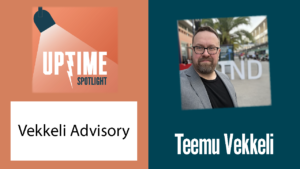
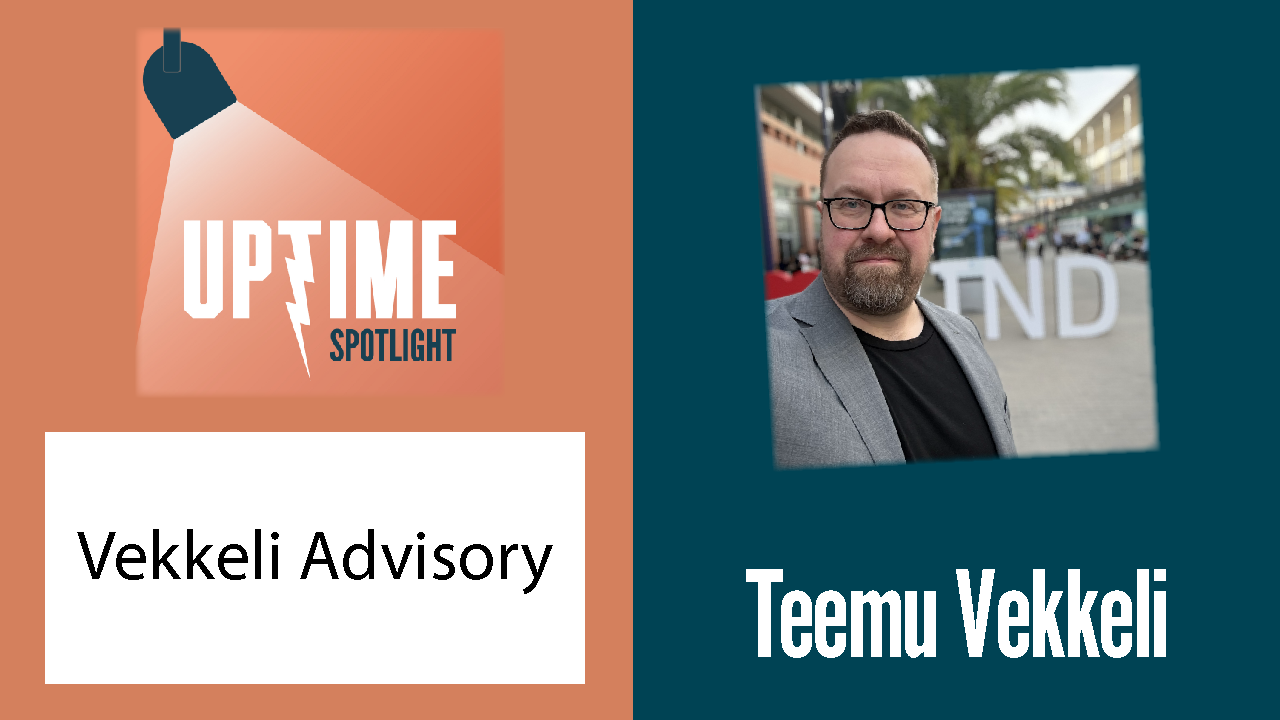
Teemu Vekkeli, Principal at Vekkeli Advisory, joins to discuss VC versus bootstrapping, budget cycles, and problems worth solving. Plus why trust drives sales in Japan, what site technicians know, and why every pitch eventually has to convince the CFO.
The Uptime Wind Energy Podcast is brought to you by Weather Guard Lightning Tech, creators of the StrikeTape Ultra LPS retrofit. Subscribe to Uptime’s Substack newsletter. And check out Rosemary’s “Engineering with Rosie” Youtube channel. Have a question we can answer on the show? Email us!
Episode Transcript
Announcer: Welcome to Uptime Spotlight, shining light on wind energy’s brightest innovators. This is the progress powering tomorrow.
Allen Hall: Teemu, welcome to the program. Teemu Vekkeli: Well, thank you, Allen. Thanks for inviting me. Great to be here.
Allen Hall: It’s great to have you. And you come at a very unique time in wind, just because there’s so many things happening. There have been a number of changes at large operators. I think everybody knows the names, where a number of good engineers and technical people have been let go for a variety of reasons, and now they’re forming their own companies. And we see this all the time on the podcast, which is great, right? Because those are really smart people that have been in the industry a long time and have a lot to offer. They’ve seen where the problems are. They know where issues sit and can offer some solutions to them. And you, being a longtime wind person in the industry, you kind of see it come and go. What are you seeing on the ground on your end? You’re based in Amsterdam. We’re based in the United States. What are you seeing locally?
Teemu Vekkeli: Yeah, for sure. A lot going on, both in terms of the majors restructuring, but I guess that’s just another cycle, as far as I can see it. But yes, for sure, also a lot happening in the startup scene. Already for some years, but now especially, there’s a large amount of talent in the market, and I’m sure people are looking into different options for their careers.
Allen Hall: I think in today’s world, there’s a lot of opportunity to make a good deal of money, a lot more than you probably made working for a large operator or OEM, because of the knowledge you have in your head. And that does seem to be where a lot of people are going right now. They’re forming two-person, three-person companies. They’ve worked together in the past and joined forces and created a company. They have a company name, they have a website up and running, and they know where problems lie, particularly on certain turbines they’ve worked on for a long time. So they have inside knowledge of what is happening there. My concern when they start some of these businesses, and this is where I want to get some of your advice, is how to form that company. How are they thinking about this? Are they trying to grab investor money and raise a couple hundred thousand euros or dollars to get started, or is this more of a bootstrap operation where we’re living off our bank account for a while?
Teemu Vekkeli: Yeah, there’s definitely different approaches. A lot of the people coming out of these utilities or major players might not have the exposure to that finance and investment side. So they’re thinking, okay, should I live off my life savings? Should I take out a loan? Should I live off my inheritance or whatever? So… a lot of options, but… And maybe if you’re really at that startup stage, maybe VC is not the option. Like you said, it comes with a set of conditions, which may or may not be favorable to everybody.
Allen Hall: Right. And if you haven’t done it before, sometimes you get yourself into a little bit of a bind. It seems so easy. I give up 10% of my company today. Well, so what? I’ve got 90% of it. It’s probably okay. Or if I have a couple of partners, maybe 20, 30% into this thing. It’s not a huge thing. However, it does come with a lot of other constraints, I’ll call them, that aren’t relative to the percentage they own, which can really bind you up for a while, especially if you’re starting.
Teemu Vekkeli: Yeah, exactly. And as you scale, then that equity at some point might become restrictive. But…
Allen Hall: Exactly.
Teemu Vekkeli: …depends on the case.
Allen Hall: Right. So the advice you’re giving people now, especially in this marketplace where there is a lot of cash available. I know it doesn’t seem like that’s a thing right now. Because of the environment we’re living in, you would think, well, there’s not a lot of VC firms, not a lot of cash. Actually, for a small business or a new business, there is a lot of cash you can get your hands on relatively quickly. But you need to get some help on that, which is where you come in, because you can get offered a whole bunch of things real early. And it may make sense. It may be the right solution for a particular company, but a lot of them may want to wait a while. That’s my opinion. What are your thoughts on that?
Teemu Vekkeli: Yeah, exactly. So have a solid proposition first before you enter that. And I guess having access to capital is also a sort of ecosystem thing…
Allen Hall: Well, that’s where you come in. I think a lot of times, as a founder of companies and meeting a lot of founders of companies, that’s the hard part. They don’t know where to go, and they’re trying to put feelers out. It’s not something you can even use ChatGPT on. There’s a hidden underground to this VC market and the cash, and sometimes even the technical expertise you may need to get your company up and running. It’s a small industry, in a sense. There are just a few thousand people that are really qualified in that space, but they’re spread all over the world. They’re literally all over the world.
Teemu Vekkeli: …being in this industry for the last 20 years. Yeah, there’s a lot of small circles around particular topics or particular geographies. Those small circles go round and round. People go into different companies. People work with each other in different capacities. And that’s also positive in a sense that you’re getting exposure to the different elements of real-world operations. But as that translates into a product, and eventually scales into a company, that’s where a lot of these smaller founders and entrepreneurs might need some support.
Allen Hall: Yeah. And a lot of times, especially now, the people you may have known are in Singapore, maybe in Brazil, maybe in India, where the technology is or where the expertise lies. That’s going to make your company really viable and give you access to some marketplaces at the same time. Those can be some really hard decisions to make versus someone you know that’s real close to you but doesn’t have any reach into the marketplace. It gets hard.
Teemu Vekkeli: That’s one aspect of it, as well as connecting to a wider market. If you’re stuck in one small town somewhere, you can only do so much, right? But if you open yourself to do business worldwide, all of a sudden there are so many more opportunities.
Allen Hall: Right. And we like to think local business is easy, because I can drive there or take a train to wherever my customer is, but a lot of times they’re not local. Which comes with its own difficulties. If you’re going to do business in India or Brazil or Europe, if you’re from the United States, there’s just different rules and different cultural aspects you need to pay attention to. And it’s hard, especially if you’re starting up a business, to try to bridge those gaps, or even to know where to think about them. For small businesses, that puts up a barrier, which is hard to overcome sometimes without some advice.
Teemu Vekkeli: A lot of people may struggle with that. Again, if you’re coming out of one small pond, then all of a sudden you’re traveling across… to learn in that.
Allen Hall: The one that always gets me is South Korea or Japan. They can be culturally very difficult for a lot of other countries to deal with and try to understand. How does this system even work? How do I approach somebody? How do I sell something in this culture without offending somebody? And all the little details you have to pay attention to are very, very real. But as a small business, you think, well, I have a solution. It’s really good. I have this really nice website. They’re going to buy. I don’t have to do the detail work. And that’s where a lot of deals fall apart, honestly, especially for a small business, over something that has nothing to do with the product.
Teemu Vekkeli: Yeah. In the end, it’s very much trust based as well. People buy from people, and ideally they buy from… interacted with before… that they have their substance lined up. Yeah. You speak about Japan. That’s a very interesting environment. I spent more than the last seven years working for a Japanese company, so I became very familiar with that kind of business environment. Very much trust based, even more so than many others.
Allen Hall: When we talk to small businesses that are starting all the time, it’s like, who’s helping you? You need a guide. You need somebody to hold your hand a little bit, and this is kind of where you come in. Because a lot of times that is the difference between failure in a country or success, just having the relationships.
Teemu Vekkeli: Yeah. It’s not about just having a contact. It’s actually having established that relationship beforehand. A lot of people reach out to me asking if I could make an introduction on their behalf. But that’s not necessarily the way to go. It’s really finding a relevant contact with a relevant need for your product, instead of just making generic introductions. And that has to work both ways. Both the vendor and the client need to get something out of it.
Allen Hall: Right. It does seem like, well, if you give me the name, I’ll take care of the rest. As a small business owner, I made this thing happen, I made this product, I can do anything. I’m invincible on some level. It’s just another name. And in America, that’s probably true, right? If I have somebody’s name and their email, I could probably negotiate some sort of deal. But that’s not a global system. That’s unique.
Teemu Vekkeli: Yeah, indeed. Different geographies, different cultures, different approaches. You might need to do that warm-up phase for a lot longer than what you might expect in the U.S., for example. I think the U.S. is a good example of a really fast cycle in that sense.
Allen Hall: Right. But that’s not necessarily where the wind industry is moving at the minute. And your success rate in America may be high. That’s just the way Americans tend to think about things. But in other cultures, probably not so much. You may have to spend a year just getting to know the other company, or your counterparts at the other company. Even locally, if you’re from Denmark, it’s a small country. You probably know a person, or a friend of a friend of a friend can introduce you, and that connects you up. But it’s hard, especially for startups, to get going.
Teemu Vekkeli: Also understanding where your potential client is in their purchase process or in their… We’re recording this at the beginning of October now, and it’s budget…
Allen Hall: Right now. Yes.
Teemu Vekkeli: So I think a lot of people are now reaching out to potential clients thinking, hey, if I can pitch myself now, I’m in next year’s budget, so I can close… you’re pitching a product or service or a solution… all the inputs have already been made. Now it’s just more about getting the spreadsheets to line up and getting leadership and management approvals, everything signed off before the end of the year. But all the inputs should probably have been prepared by May. And if you need to run a pilot before that input becomes tangible, you’re looking at 6 to 12 months of lead time.
Allen Hall: Well, that comes back to the initial startup question. How long will I have to make this startup go? How long do I need to fund this thing? My answer is, if it’s a physical product, it’s probably two and a half years. And that’s if everything works great. That’s the first product hits, works, delivers. It will sit for a year, almost always.
Teemu Vekkeli: Yeah. Easily. And that’s already when you have the product in a tangible form. That’s not taking into account the R&D that goes into it. So if you’re starting now, especially with a hardware product, like you said, that could easily take a lot more time.
Allen Hall: It does take a long time, having lived it. It’s between four and five years before you really get going, which is hard to think of. If you’ve been around wind long enough and you understand how that marketplace works, the buyer wants a delivered, finished product that can prove out the numbers immediately. And then they’re going to run it and check it. There’s a trust-but-verify piece to wind, where yes, they trust you, they believe in your product, but they’ll let it sit out on a site for a year or two to make sure. Because if I buy a thousand of these components and a thousand of them all fail, that’s a huge risk, right?
Teemu Vekkeli: Yeah. That’s not good for anybody.
Allen Hall: …part of this, and I want to get your thoughts on this aspect, which is the problem you’re about to solve. I think for a lot of small businesses, they think, I know what this problem is. I’m going to solve it with this whiz-bang thing. Or maybe I don’t really have a solid idea of the problem, but I have this product, most likely software, that I can deliver, and it’ll probably fit. We can make it work. It’s a jigsaw puzzle kind of problem. It’ll click in somewhere in this industry. But that’s a really dangerous way to go, in my opinion, without having some sense that I have a known problem. Is it a top three problem for X, Y OEM or operator? If it’s problem number ten, the chances of getting inside this company are really low, because they’re trying to work on problems one, two and three. How do you frame that to someone who is starting up? What problem are you solving? Is it important enough that someone would buy it?
Teemu Vekkeli: Obviously a lot of these get ranked purely because of financial implications. How much money is the operator losing, or how much downtime does this fault generate on a regular basis? But if you really look at the volume of data coming out of a wind turbine or a wind farm, is there something with maybe a lower individual impact, but a huge volume of events over a certain period of time, which accumulates?
Allen Hall: It doesn’t have to be a $1 million event on its own. It can be several thousand-dollar events that stack up to be million-dollar or multimillion-dollar events, which is what happens.
Teemu Vekkeli: Yeah. You see a lot of small things around pitch, converter, control system, things like that, sort of piling up over and over over the course of a year. Or it’s small things where you might need to… a guy or girl on Christmas morning to fix or troubleshoot the turbine, when you could have seen that happen weeks ago. So small things that add up to a lot on the financial side, but then also a lot of frustration. And of course, if there are things on the health and safety side… solve those kinds of things…
Allen Hall: I always think, in terms of trying to find that problem you’re going to go solve, you can’t just theorize whether the problem is real. You have to go to the customers. You have to see what they’re living day to day. As engineers, a lot of times we’re isolated in the company office. We’ve got the coffee pot, we’ve got the cafeteria. We don’t get down into the trenches where the problems exist. One of my first pieces of advice to people is, have you been out to a site to actually see if that’s real? How big of a problem is it? If the technician doesn’t say something about it in the first ten minutes when you ask what the problems are… They start rattling them off, and they usually have a list. If it’s not in the top three or four, then it probably isn’t the problem to go solve. But they are telling you about problems that should be solved and that are probably also extremely expensive for the company.
Teemu Vekkeli: A lot of times the frontline technicians, the guys and girls on the ground, have access to that knowledge, and they’re usually…
Allen Hall: Yeah, sometimes you open the floodgates. What are the problems on the site? And then boom, you may be there for an hour and a half, two hours listening to all the problems they have. But they’re giving you a chance to make an impact on that business. Every time you hear those problems, you’re like, wow, pitch actuators are a problem on the site. If someone had a really good pitch actuator, they would make a fortune. They would make a fortune. A lot of times I think engineers just don’t filter that. Well, it’s not the problem I solve, so I’m going to ignore it. But it may be laying at your doorstep. A $1 million, $5 million, $10 million business that you could get into.
Teemu Vekkeli: Stacking up the problems, finding out what actually makes a difference in the day to day, could improve productivity by a lot.
Allen Hall: Sure.
Teemu Vekkeli: So we’re talking here about products and services. It’s not just for the turbines, of course, but for the people working on them, right?
Allen Hall: Right. Which is where a lot of products exist today. Some of the hottest products I know of that are selling have really not a lot to do with the turbines themselves. They’re more about the technicians who operate the turbines, making their life just a little bit easier, from better tools, better fitment, being lighter weight. Even the lifts that are going in turbines today across the United States. Five years ago, that wasn’t a thing, but it’s a huge marketplace now. Somebody listened to technicians complain about their knees and decided to do something about it.
Teemu Vekkeli: Yeah.
Allen Hall: When someone comes to you, which they should, because you have a lot of knowledge in the industry, and they’re starting a small business, they’ve got a couple of friends that are in this thing, what are you going to walk through with them to say, hey, this is a good business, this is smart? Or maybe, here’s some things to think about. How do you approach that?
Teemu Vekkeli: Yeah, a good one is… it’s as simple as that. Whose problem are you solving? …the actual direction they want to take things, and more about the technical details of that. The site technician may have their own set of concerns. The operations manager might have their own. And then there’s the asset manager and the finance… whoever else in the organization. They all have different angles based on their own priorities, of course. But then again, if you are addressing the concerns of the site technicians, eventually you will need to convince the CFO.
Allen Hall: Right. It’s ultimately who writes the check. And you need to get to the people who are writing the checks. If they don’t think it’s a problem, then you have a lot of selling to do, or explaining of the issue, which the technicians haven’t been able to do internally.
Teemu Vekkeli: Exactly. So there is a certain disconnect between the different disciplines in this industry, whether that’s finance, project development, operations, asset management, and the maintenance side. Part of the philosophy I’m preaching is bridging those gaps between the different parts of the organization, letting reality inform strategy, and asking better questions. And in the end, we’re going to end up with better renewables.
Allen Hall: Right. Reality is the piece there, because interacting with a large OEM or a large operator is not about convincing a person to make a commitment to a product or service. It is about convincing the organization to do that. And organizations are designed not to buy things.
Teemu Vekkeli: …there’s a dozen other small companies, startups, scale-ups, whatever, pitching themselves to the same operators or utilities or OEMs. So yes, it’s very much about differentiating yourself toward the end client as well. What is your unique proposition, and how would you uniquely solve this thing?
Allen Hall: You raised a great point there. When you’re starting a small business, you think, I’m the only one pitching this thing, whatever this product is. In reality, when I talk to engineers, particularly the ones who get pitched a lot, I never thought it would be happening this way, but essentially most of an engineer’s week at an OEM or a large operator is listening to pitches of new products and new ideas. It’s a substantial part of the workweek. So if you’re a new company, you’re not the only one doing this, and you have to realize it. Engineers have probably heard this story five or six different times in different forms before you even get there. What am I bringing that’s different? Why am I different? What makes me unique?
Teemu Vekkeli: Right.
Allen Hall: Letting reality take place and understanding what reality is, that’s the hardest part for a small business. And Teemu, you’ve been around a long time and seen it from different parts of the world, which adds perspective, honestly. I think that’s the key here. You bring a lot of experience to the table to help bridge some of those gaps for these new startups, of which there are a lot, and some of them are really fantastic from what I’ve seen so far. But they’re going to struggle, because it tends to be a long haul unless you have help, unless you have a little bit of guidance and someone taking you by the hand a little bit. How do people get ahold of you and start to work with you? What is the best way to contact you and start their journey?
Teemu Vekkeli: Well, I’m relatively easy to get ahold of. I’m active on LinkedIn. I recently started a…
Allen Hall: Oh, great.
Teemu Vekkeli: …if the philosophy I’m preaching resonates. Yeah…
Allen Hall: It should.
Teemu Vekkeli: …me on LinkedIn.
Allen Hall: Yes. So reach out to Teemu on LinkedIn for sure. He’s easy to reach, and we’ll put the contact details in the show notes. Get help. Don’t think you’re going to be able to do this by yourself and survive. The ones that have been successful have gotten advice early, so you’re not spending money in ways that don’t produce. It makes a huge difference. So Teemu, thank you so much for being on the podcast today. I’d love to have you back, because these discussions are very insightful, just getting a sense of what’s happening in the marketplace and how we can uplift the industry.
Teemu Vekkeli: Thanks very much, Allen. And yeah, pleasure to be here.