




A west Texas Wind Farm installed StrikeTape as a retrofit lightning protection solution. During the 16-month period following the installation there was zero lightning damage to the wind farm’s 37 GE turbines.
This report outlines the installation process, environmental conditions, and performance results, demonstrating the technology’s effectiveness in mitigating lightning-related downtime and reducing maintenance costs.
Project Overview
Location: West Texas (Central U.S.) wind farm with 37 GE 2.3-2.5MW turbines
Problem: Repeated lightning damage to turbine blades, leading to increased maintenance, unexpected downtime, and safety concerns.
Solution: Retrofit installation of StrikeTape lightning diverters on all turbines.
Lightning Environment
The wind farm is located in a region with frequent thunderstorms and high lightning activity, with a statistical average of 40 lightning events per km2 per year. The wind farm’s 15 km2 footprint means it receives roughly 600 lightning events yearly.
Blade protection was critical. Prior to the retrofit, several turbines suffered from burn-throughs and delamination due to direct lightning strikes.
Technology: How StrikeTape Lightning Diverters Work
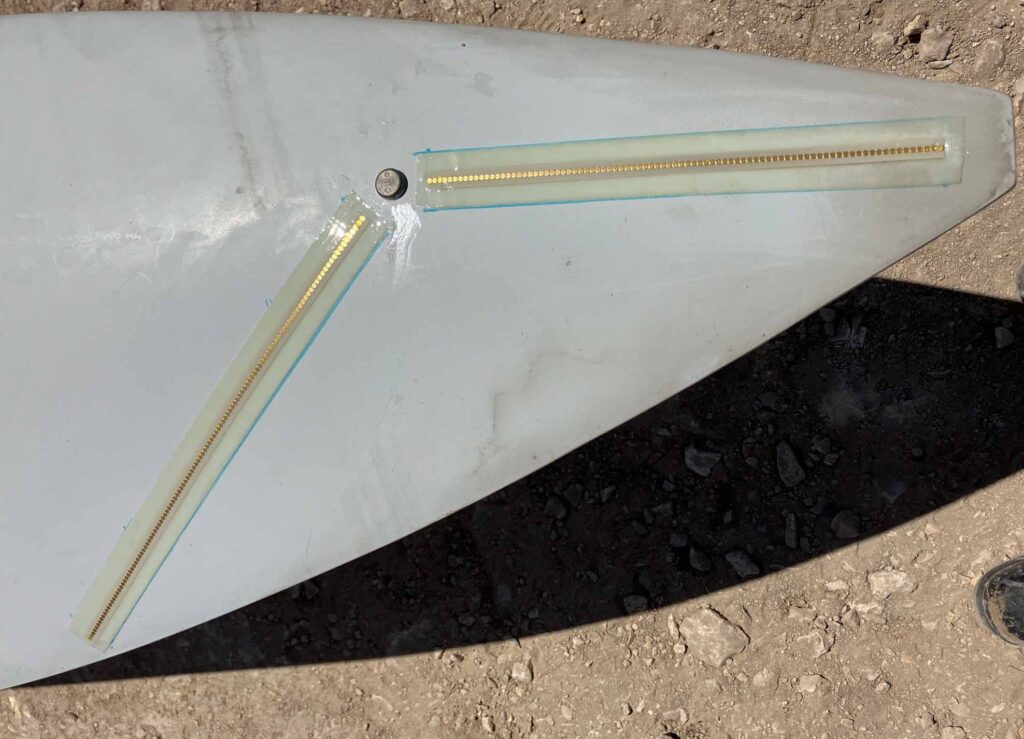
Rather than attaching to the blade, lightning follows the path created by the StrikeTape LPS to the factory blade receptor and grounds, rather than burning and destroying the blade.
Features:
- Surface-mounted diverter system
- Non-conductive and UV-resistant, rain-erosion tested
- Aerodynamic design does not increase resistance
- Enhances lightning dissipation without compromising blade performance

Installation Method: A 3- Step Process
Installation was performed by trained technicians, during scheduled downtime in the repowering process. Weather Guard engineers determined optimal placement for StrikeTape diverters and demonstrated the 3-step installation process, which includes:
- Surface preparation of blade tip area
- Application of StrikeTape using proprietary adhesives
- Curing and quality inspection
Results
StrikeTape was successfully installed on all 37 turbines. Following the retrofit lightning protection installation, select turbines were monitored with EOLOGIX-PING acoustic and lightning sensors for 16 months.
The wind farm experienced zero blade damage throughout the monitoring period. During the same period, more than 50 lightning strikes were reported by EOLOGIX-PING and a leading lightning reporting service.
Following the StrikeTape LPS installation, the wind farm had a notable reduction in unscheduled maintenance and improved turbine availability.
Operational Impact
Before Retrofit:
- Frequent lightning-related shutdowns
- High O&M costs due to unplanned blade repairs
After Retrofit:
- Preventative protection yielded lower total cost of ownership
- Enabled predictive maintenance planning
- Reduced crew exposure to hazardous repair conditions
Conclusion
StrikeTape provided a cost-effective, high-performance solution for lightning mitigation. For wind farm operators in lightning-prone regions, the product offers measurable reliability improvements and supports long-term asset protection.
Download other case studies, printer-friendly specifications, rain erosion test results, high current test results, and more here.
To request more information or a consultation about reducing lightning damage on wind turbine blades:
Weather Guard Lightning Tech
📧 info@wglightning.com
🌐 weatherguardwind.com
📞 1.413.217.1139